

Spatial Scaling Dynamics
The Geography That Analytics Ignores

The missing spatial layer
Most ecosystem analysis operates at two levels: continental and national. Both obscure a third layer - intra-country spatial dynamics - that shapes how capital, talent, and opportunity are actually distributed. The intra-country dimension - where capital lands within national markets, and to which founders - remains underdeveloped in research, policy, and programme design. The consequences are structural, not incidental.
The theoretical foundation for what is happening is older than the venture-ecosystem literature. Gunnar Myrdal's Economic Theory and Under-Developed Regions, published in 1957, set out the cumulative-causation framework: economic activity, once concentrated, attracts more activity through self-reinforcing dynamics - talent, capital, services, infrastructure each compound where the others have already settled. Convergence is the exception that requires explanation; divergence is the default. Paul Krugman's Geography and Trade and the New Economic Geography literature for which he received the Nobel Prize formalised the model: increasing returns at the firm level produce concentration at the spatial level, and the concentration is path-dependent - once established, the equilibrium is structurally difficult to disturb.
Mkalama and Ouma, in the Socio-Economic Review, apply Gordon Clark's "money flows like mercury" thesis to African venture capital - capital clustering toward particular ecosystems through gravitational dynamics that macroeconomic factors alone cannot fully explain. Macroeconomic indicators identify which national markets attract capital. The social geography of who actually receives it operates beneath that level. African ecosystem concentration, viewed through this analytical frame, is not a continental anomaly. It is the predicted outcome of standard spatial-economic theory operating in an environment where the centripetal forces - agglomeration economies, infrastructure complementarities, deep labour markets - have not been counteracted by the centrifugal interventions that produced the more dispersed economic geographies of mature economies.
The implication for ecosystem policy is sharper than it first appears. Dispersing concentrated economic activity requires interventions sized to the underlying force. Marginal interventions against structural concentration produce marginal results.

The intra-country concentration problem
Within Kenya, the concentration is measurable with precision.
The Kenya Innovation Outlook 2024 finds that:
Over 75 percent of business development service providers are located in the capital
Kenya (therefore Nairobi) secured $638 million in startup funding in 2024 - approximately 88 percent of East Africa's total
These are not independent findings. They describe a single structural condition: the ecosystem is spatially concentrated to the point of functional equivalence between city and system.
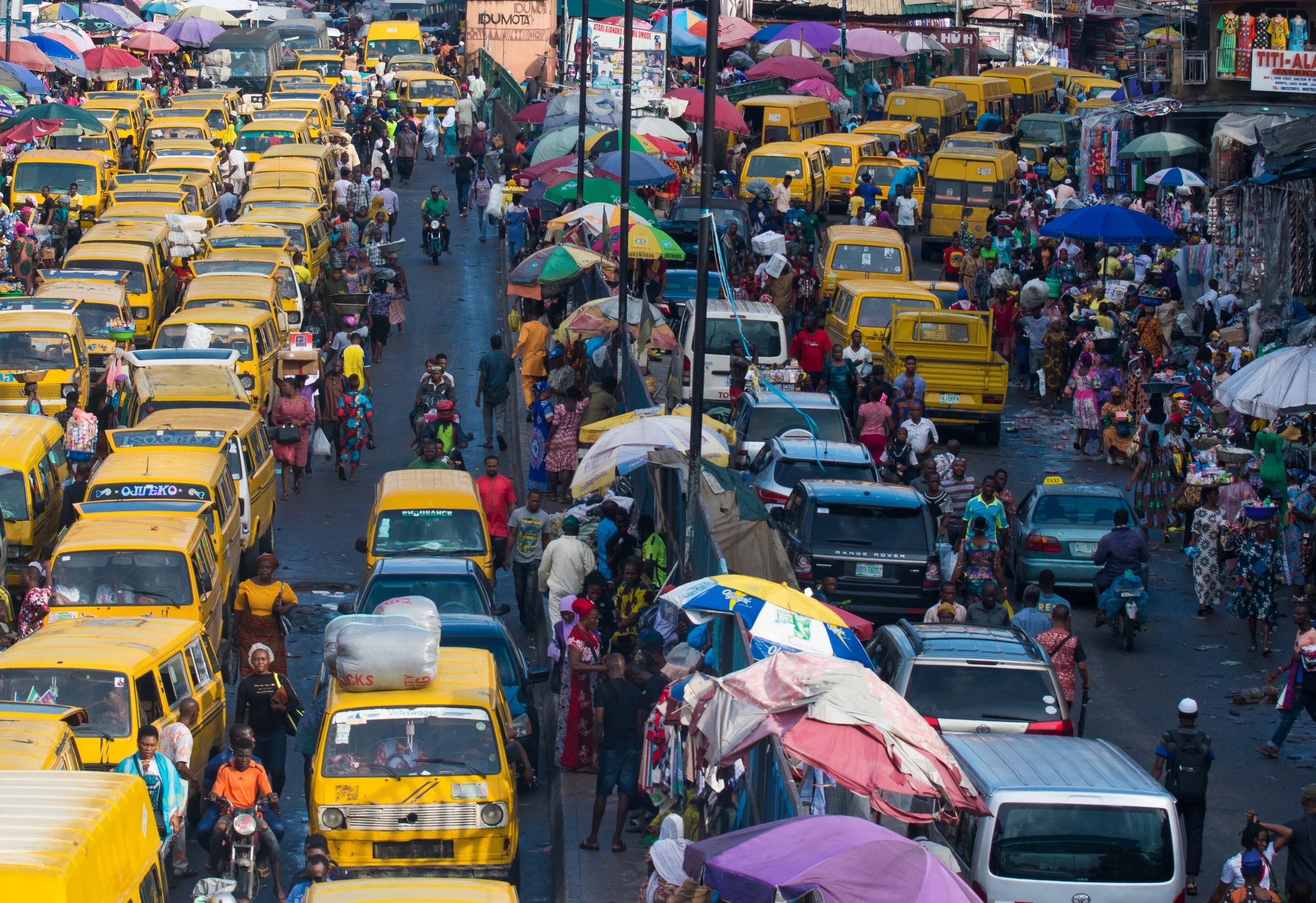
The Kenyan pattern repeats with different intensity across the continent. South Africa's startup ecosystem concentrates across Cape Town, Johannesburg, and to a lesser extent Durban - a tri-city distribution shaped by the country's distinct industrial history. Nigeria's funding architecture concentrates in Lagos, with Yaba's tech cluster functioning as a single neighbourhood economy that captures the dominant share of Nigerian deal flow. Ethiopia's emerging ecosystem is heavily Addis-Ababa-centred. Egypt's tech activity concentrates in Cairo, with smaller secondary hubs in Alexandria and Smart Village. Morocco's activity centres on Casablanca and Rabat. Côte d'Ivoire's nascent ecosystem concentrates in Abidjan.
The drivers of this concentration are cumulative. Talent aggregates where employment opportunities are most dense. Firms cluster where talent is available. Investors concentrate where firms are visible and investable. Support infrastructure - accelerators, legal services, advisory firms, regulatory authorities - follows where sufficient demand exists to sustain it. Edward Glaeser's Triumph of the City sets out the empirical case for why this happens: cities are productivity engines because of agglomeration - face-to-face knowledge spillovers, deeper labour markets, infrastructure scale economies, the dense weak ties through which opportunities and talent move. African primary-city concentration looks pathological from an equity perspective and rational from an agglomeration perspective. Both readings are correct simultaneously.
This produces an analytical conclusion that ecosystem-policy discourse rarely acknowledges. Secondary-city development is not an exercise in dispersing primary-city activity. It is an exercise in building secondary agglomerations of sufficient density to function as agglomerations. Below a critical threshold of firm density, talent depth, and supporting-services availability, secondary cities consistently underperform their primary-city counterfactual - because the agglomeration economies that make scaling possible have not yet formed. Programmes that distribute marginal capital across many secondary cities, without concentrating enough in any one to cross the agglomeration threshold, produce the worst of both architectures: insufficient density to compound, but enough programme presence to absorb resources and report activity.
Once established, the concentrated structure becomes self-reinforcing. During the 2022–24 correction, capital did not disperse geographically. It contracted inward, reinforcing the dominance of primary cities. Concentration tightened under stress. This dynamic is reflected in investment design itself. The IFC's $5 million equity backing of P1 Ventures in 2024, supporting the fund's commitment to placing half its portfolio companies in Francophone African markets and IDA low-income countries, directly acknowledges the persistence of geographic concentration. When intervention is required to counteract a pattern, the pattern is structural.

The strategic dilemma for scaling ventures
This spatial structure produces a consistent dilemma for scaling ventures.
Primary-city location provides access to capital, talent pools, professional services, and regulatory proximity. These advantages are critical at early and growth stages. They also come with high operating costs and intense competition for skilled labour.
Secondary cities and rural markets offer access to core demand - agricultural systems, distributed consumers, and SME networks that underpin large segments of African economies. These markets are often where the most significant growth opportunities lie. They lack the infrastructure required to support scaling: limited access to capital, weaker support ecosystems, and thinner talent pools.
The most effective ventures navigate this tension through hybrid spatial models. Headquarters, investor relations, and strategic functions remain anchored in primary cities. Operations, distribution, and market engagement are decentralised. This architecture is widely observed across high-performing firms - including in the case material treated in Venture Case Studies - and is particularly pronounced in sectors such as agriculture, logistics, and financial services.
The hybrid spatial position is also the most complex model to operate. It requires managing dual organisational systems, bridging formal and informal markets - the institutional logic treated substantively in The Informal Economy as Scaling Substrate - and sustaining coordination across geographically distributed teams. Success depends heavily on institutional knowledge that is rarely codified and that takes years to build. This is consistent with the observation across mature firm-level scaling literature that successful multi-location operation is among the most difficult organisational competencies, Bloom and Van Reenen's management practice variation work showing that the firms which manage geographic distribution effectively are a small minority of the firms that attempt it.

Sub-national heterogeneity: beyond the primary-secondary dichotomy
The primary-city / secondary-city framing is itself a simplification of a more complex spatial structure. African economies contain not just primary and secondary tiers but distinct sub-national economic systems whose institutional logics, sectoral compositions, and external linkages differ materially.
Within Kenya, Mombasa operates as a port-and-logistics economy whose linkages to Indian Ocean trade, Gulf investment, and East African transit corridors structure it differently from Nairobi's services-and-finance core. Kisumu functions through the Lake Victoria economy with cross-border trade flows toward Uganda, Tanzania, and the eastern DRC that shape its commercial logic. Eldoret's agro-industrial mix is built around the Rift Valley's cereal and dairy systems. The northern frontier - Wajir, Garissa, Mandera - operates through pastoralist economic systems whose relationship to formal financial and regulatory architecture is structurally distinct. Each is a different sub-national economic system. Each requires different ecosystem-support architecture.
The same heterogeneity applies elsewhere. South Africa's Johannesburg-Cape Town-Durban triad each carries different industrial history (mining-financial, services-tech, port-industrial) and produces different ecosystem dynamics. Nigeria's Lagos-Kano-Port Harcourt-Onitsha geography contains four economic systems with different colonial inheritances, religious and linguistic structures, sectoral compositions, and external orientations. Ethiopia's Addis Ababa-Mekelle-Bahir Dar-Dire Dawa pattern reflects ethnic-federal political structure and uneven war-and-conflict legacies. Egypt's Cairo-Alexandria-Upper Egypt geography sits across markedly different income profiles and absorptive capacities.
The African Cities Research Consortium, led by Diana Mitlin and colleagues at Manchester, develops this argument empirically across multiple African cities - secondary cities are not smaller versions of primary cities. They have different histories, different functions, different opportunity structures, and different binding constraints. Programmes designed against an undifferentiated "secondary city" category routinely misallocate against the specific economic structure of the cities they ostensibly serve. The opportunity for ecosystem support that recognises this heterogeneity is real. The institutional capacity to operate at that level of granularity is rare.

Infrastructure complementarities: the spatial concentration of the conditions for dispersion
Spatial concentration of ecosystem activity tracks spatial concentration of physical and digital infrastructure. The four largest African ecosystems are also the markets with the deepest fibre infrastructure, the most reliable power, the most active data-centre footprint, the largest international airports, and the deepest financial-sector institutions. The African Infrastructure Development Index confirms the pattern across categories. The IFC and World Bank infrastructure-investment data records the same dynamic: infrastructure investment concentrates where infrastructure already exists, because returns to infrastructure investment are higher where complementary infrastructure is already in place.
The compounding effect produces a structural paradox. Spatial diversification of ecosystem activity depends on spatial diversification of infrastructure investment. The infrastructure investment that would produce dispersion is itself spatially concentrated. Without explicit, sustained intervention to invest infrastructure ahead of demand in secondary locations, the spatial pattern of ecosystem development reproduces the spatial pattern of infrastructure investment indefinitely.
This is where the institutional-continuity argument from the Innovation Infrastructure chapter bites hardest. Senegal's MADIBA vaccine manufacturing facility was built in Diamniadio, not Dakar. Rwanda's Kigali Innovation City is a deliberate, state-sustained spatial intervention. Morocco's Tangier Med port-and-industrial corridor has produced an ecosystem entirely outside Casablanca's gravity. These are not market outcomes. They are the products of state-coordinated, multi-decade spatial-investment commitments - exactly the form of intervention the cumulative-causation theory predicts is necessary to disturb a self-reinforcing concentration equilibrium.
The implication is that ecosystem support designed without an infrastructure-investment partner is operating against the wrong constraint. The binding constraint on secondary-city ecosystem development is rarely the absence of an accelerator, mentorship programme, or hub. It is the absence of the infrastructure that would make the secondary city a place where firms could productively scale.

Demographic compounding: the spatial dynamics are not stable
The spatial structure this section describes is not stable. It is evolving against a demographic backdrop that compounds primary-city pressure.
UN DESA projects African urban population to approximately double between 2025 and 2050, reaching nearly 1.5 billion. Lagos, Kinshasa, Cairo, Dar es Salaam, Luanda, Khartoum, Nairobi, Abidjan, and Casablanca will all be in the 10-million-plus category. Several will exceed 20 million. The Africapolis database, developed by the OECD Sahel and West Africa Club, documents Africa’s urbanisation trajectory across thousands of urban agglomerations with more than 10,000 inhabitants, providing one of the most comprehensive empirical foundations for sub-national spatial analysis. The pattern is clear: African urbanisation is unprecedented in scale, geographically uneven, and still accelerating.
The implications for ecosystem policy are direct. The primary cities will become more concentrated, not less, even if intentional secondary-city interventions are pursued - because the demographic base feeding them is growing faster than secondary-city investment can plausibly counteract. Secondary cities themselves face their own absorptive challenge: Kano, Mombasa, Tamale, Kumasi, Bouaké, Mekelle, and dozens of others are absorbing population growth at rates that strain housing, services, and labour-market capacity simultaneously. The secondary-city development opportunity is real but operates against demographic pressures that intensify the absorption problem at exactly the moment investment would need to compound.
The Cities Alliance work on secondary cities in Africa and the IIED working papers on urban informality provide the empirical foundation for designing interventions calibrated to this trajectory rather than to the static distributional snapshot. Most ecosystem programmes are designed against the snapshot. The trajectory is what they will need to operate against in five to ten years.
Specific secondary opportunity: Kano and Francophone West Africa
Two spatial gaps illustrate where this structure leaves substantial opportunity unaddressed.
Kano, Nigeria's second-largest city, operates as a major commercial hub for northern Nigeria and the wider Hausa-speaking region. Its economic system is shaped by linguistic, cultural, and religious factors distinct from Lagos-based ecosystems. Financial infrastructure adapted to this context remains underdeveloped. The venture that successfully builds scalable financial services within this system would access a large, relatively insulated market. Kano's commercial history - as a centre of trans-Saharan trade for centuries before Lagos became Nigeria's commercial capital - gives it an institutional and commercial inheritance that Lagos-built models routinely fail to recognise.
Francophone West Africa represents a broader structural gap. Cities including Abidjan, Dakar, Douala, and Yaoundé serve populations approaching 120 million, yet remain underrepresented in formal investment data. Differences in legal frameworks, banking systems, and language create barriers to entry for investors and ecosystem actors accustomed to Anglophone markets. The OHADA regional commercial law architecture, the CFA franc monetary structure, and the BCEAO regional banking system produce a financial-regulatory environment that Anglophone-built investment infrastructure does not fluently navigate.
Abidjan is establishing itself as a regional fintech hub - with 33 startups and $264 million in funding per StartupList Africa's 2025 fintech city analysis, supported by Côte d'Ivoire's 2023 Startup Act - but the baseline remains thin relative to the market opportunity. Dakar's emerging position is supported by Senegal's deliberate state-coordinated spatial commitment exemplified by the MADIBA vaccine facility. Douala and Yaoundé's tech activity remains substantially below the level the population and economic base would support.
These are not peripheral markets. They are structurally underserved segments of the core economy.
What spatial analysis means for ecosystem strategy
Five implications follow.
First, ecosystem support investment is spatially misallocated. Additional investment in already dense primary cities generates diminishing marginal returns. Secondary cities and underserved regions offer greater potential for system expansion, but require deliberate targeting and investment scaled to cross the agglomeration threshold rather than dispersed below it.
Second, data infrastructure reproduces spatial bias. The geographic scope of initiatives such as EADC is regional, but underlying data collection remains concentrated in primary cities. The Kenya Innovation Outlook's Nairobi-heavy sample reflects structural visibility, not methodological error. The Africapolis database demonstrates what distributed data architecture looks like at the urbanisation level. Building equivalent distributed data systems for innovation activity requires intentional design and higher operational investment than is typically budgeted.
Third, support infrastructure does not translate directly across geographies. Accelerators and ecosystem programmes designed for dense urban environments do not function effectively in secondary cities without adaptation. These contexts require longer engagement horizons, more operational support, and integration with physical infrastructure systems. The Africa Cities Research Consortium's empirical work documents this consistently across multiple cities.
Fourth, spatial intervention requires institutional continuity that exceeds standard programme cycles. The successful African examples - Kigali Innovation City, MADIBA in Diamniadio, Tangier Med - were sustained over fifteen years or more across political cycles. Programme architectures designed against five-year donor cycles cannot deliver the institutional continuity that successful spatial intervention has historically required.
Fifth, the demographic trajectory compounds the urgency. The window in which intervention to disperse the concentration equilibrium is even theoretically possible is closing. Each additional decade of unintervened cumulative causation makes the cost of subsequent dispersion higher. Action calibrated to the trajectory is a different strategic posture from action calibrated to the snapshot.
The structural mechanism
Spatial concentration is the Misaligned Incentive Engine made visible. Programme activity is directed toward visible, accessible ecosystems because measurement, delivery, and accountability are operationally tractable in those locations. The harder spatial work - building secondary agglomerations of sufficient density, sustaining institutional commitment across electoral cycles, investing infrastructure ahead of demand in locations where the demand has not yet formed - is structurally harder for programme architectures to execute.
The outcome is a system that appears active and well-resourced, yet remains spatially narrow - repeatedly directing resources toward the same locations while leaving large segments of the economy structurally underserved. The cumulative-causation theory predicts that this concentration intensifies over time absent counter-intervention. The empirical record across the 2022–24 correction confirms the prediction. The geography that analytics ignores is the geography in which the next decade of African scaling will either disperse or concentrate further. The intervention is operationally difficult and theoretically demanding. Its absence is not a neutral outcome.